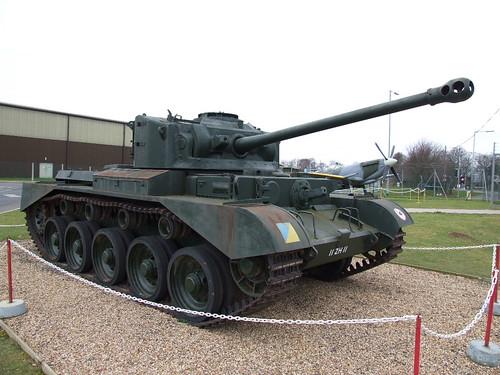
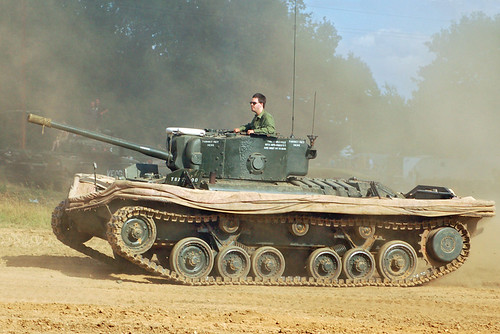
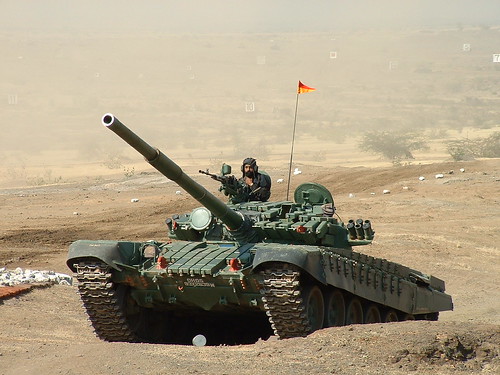
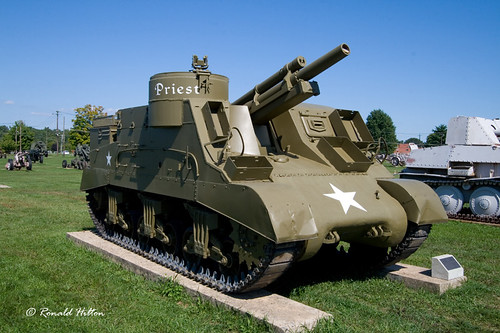
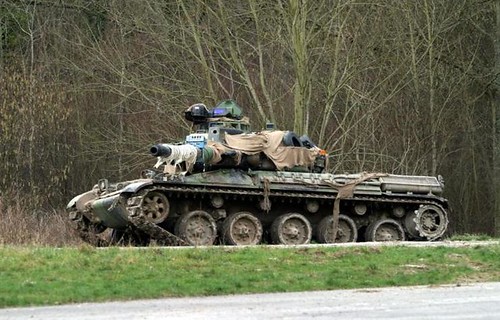
t72 tank pictures of czech army
upgraded t72 mbt pictures of east europe
Merkava MBT in the battle field
Boxer Armored Personnel Carrier pics


The Boxer is a German-Dutch multirole armoured fighting vehicle designed to accomplish a number of operations through the use of installable mission modules. It is produced by the ARTEC GmbH (ARmoured vehicle TEChnology) industrial group, and the programme is being managed by OCCAR (Organisation for Joint Armament Cooperation). ARTEC GmbH is seated in Munich, its parent companies are Krauss-Maffei Wegmann and Rheinmetall on the German side, and Stork PWV (now also a subsidiary of Rheinmetall) for the Netherlands. Other names are GTK (Gepanzertes Transport Kraftfahrzeug; armoured transport vehicle) Boxer and "MRAV" for Multirole Armoured Vehicle The Boxer is an eight-wheeled MRAV, easily dwarfing most contemporary vehicles with its size. At 33 ton combat weight, it is also about 10 tons heavier than many other contemporary vehicles within the same role. It is designed to carry out a variety of utility missions with maximum flexibility; this is achieved via several different "mission modules" specialized for various tasks which are available separately from the vehicle. The base vehicle is independent of the modules, and modules can be interchanged within an hour. Each module incorporates a primary safety cell with a triple floor
chinese latest fighter pics
f117 stealth bomber wallpapers
Peru airforce pictures
iaf Sukhoi fighter aircraft picture
sukhoi su27 fighter airplane front view
the largest transport airplane in the world


The Antonov An-225 is commercially available for flying any over-sized payload due to the unique size of its cargo deck. Currently there is only one aircraft operating but a second mothballed airframe is being reconditioned and is scheduled for completion around late 2008General characteristics
Crew: 6 Payload: 250,000 kg (550,000 lb) Door dimensions: 440 x 640 cm (14.4 x 21.0 ft)) Length: 84 m (275.6 ft) Wingspan: 88.40 m (290 ft 2 in) Height: 18.1 m (59.3 ft) Wing area: 905.0 m² (9,743.7 ft² Cargo Volume 1300m³ ) Empty weight: 175,000 kg (385,800 lb) Max takeoff weight: 600,000 kg (1,322,773 lb) Powerplant: 6× ZMKB Progress D-18 turbofans, 229.5 kN (51,600 lbf) each Takeoff run: 3,500 m (11,500 ft) with maximum payload Performance
Maximum speed: 850 km/h (460 knots, 530 mph) Cruise speed: 800 km/h (430 knots, 500 mph) Range:
With maximum fuel: 15,400 km (9,570 mi) With maximum payload: 4,000 km (2,500 mi) Service ceiling 11,000 m (36,100 ft) Wing loading: 662.9 kg/m² (135.5 lb/ft²) Thrust/weight: 0.234
c17 airplane extra large image
Eurofighter typhoon fighter jet engine pictures


General characteristics
Type: Turbofan
Length: 157 inches (4.0 m)
Diameter: 29 inches (0.737 m)
Dry weight: 2,180 lbs (989 kg)
Components
Compressor: 3-stage LP, 5-stage HP
Turbine: 1-stage LP, 1-stage HP
Performance
Thrust: 13,500 lbf (60 kN) dry thrust / 20,000 lbf (90 kN) with reheat
Bypass ratio: 0.4:1
Overall pressure ratio: 26:1
Specific fuel consumption: 21-23 g/kNs dry thrust / 47-49 g/kNs with reheat
Thrust-to-weight ratio: 9.175:1
f15 airplane wallpaper


The Boeing F-15 Eagle is a all-weather tactical fighter designed to gain and maintain air superiority in aerial combat. It was developed for the United States Air Force, and first flew in July 1972. It is one of the most recognized fighters of the modern day. The F-15E Strike Eagle derivative is an all-weather strike fighter that entered service in 1989. The F-15 has not been shot down in air-air combat as of 2008. The U.S Air Force plans to keep the F-15 in service until 2025
f16 airplane wallpapers screensaver
leopard 2a4 tank computer wallpapers
ww2 american tank m26 pershing drawing

The Heavy Tank M26 Pershing was an American heavy tank used during World War II and the Korean War. It was named after General John Pershing
Length 20 ft 9.5 in (6.34 m) (turret facing aft)
28 ft 4.5 in (8.65 m) (turret facing forward)
Width 11 ft 6 in (3.51 m)
Height 9 ft 1.5 in (2.78 m)
Crew 5 (Commander, Gunner, loader, driver, co-driver)
tiger1 tank in ww2 pictures gallery


Tiger I tank is a German heavy tank of World War II. The initial official German designation was Panzerkampfwagen VI Ausführung H (abbreviated PzKpfw VI Ausf. H, but the tank was redesignated as Panzerkampfwagen VI Ausf. E in March 1943. The tank also had the ordnance inventory designation SdKfz 181.Tigers were capable of destroying the American Sherman or British Churchill IV at ranges exceeding 2,000 m. In contrast, the Soviet T-34 equipped with the 76.2 mm gun could not penetrate the Tiger frontally at any range, but could achieve a side penetration at approximately 500 m firing the BR-350P APCR ammunition. The T34-85's 85 mm gun could penetrate the Tiger from the side at about range 1,000 m. The IS-2's 122 mm gun could destroy the Tiger at ranges beyond 1,000 m
upgraded bmp2 armored troop carrier
t64 mbt pictures


main gun D-81T 125 mm smoothbore gun
Secondary armament
7.62 mm PKMT coax machine gun, 12.7 mm NSVT antiaircraft machine gun
M61 20 mm fighter plane cannon


the first female F-22 fighter pilot

This aircraft is being flown by Capt. Jammie Jamieson the first ever female F-22 fighter pilot.
Capt. Jammie Jamieson was the first female fighter pilot to qualify in the F-22A Raptor. the nation's newest fighter jet The Air Force now has an estimated 14,000 pilots, including nearly 3,700 fighter pilots and of that, 70 are women
It took 10 months of training after flying F-15Cs for three years in Alaska to transition to the F-22A, said Jamieson, who will be available to chat at McChord this weekend.
Jamieson called the Raptor "a highly lethal, highly survivable tactical aircraft with a much improved human interface and a very sophisticated avionics suite."
She grew up in Prosser and earned a nomination to the Air Force Academy in 1996. She received a degree in aeronautical engineering in 2000, then a graduate degree in public policy from Harvard. She is married to a fighter pilot who teaches at Nellis Air Force Base in Nevada.
Like other women who have begun flying combat missions since restrictions were lifted in 1993, Jamieson sees herself as a fighter pilot and officer in the U.S. armed forces, period.
"Either you can meet the standards and do the job or you cannot. In this life-or-death business, my demographic is irrelevant," Jamieson said.
"The two things that bring me (or any other fighter pilot) safely home from missions every day are my knowledge of the aircraft and my ability to physically execute the necessary tactics -- my gender, race, religion, etc. have nothing to do with it."
WW11 german army photos
ww11 german tank 3d pictures
Indian Su-30 Flanker sideview
The Su-30 Flanker is blessed with massive power, and this variant is fitted with variable geometry nozzles. Although not seen here (photography from behind was difficult, with far too much vapour), the afterburner gives out a distinctive blue coloured flame. Seeing these Indian Flankers operating beside RAF Tornado F3s at Waddington in the summer of 2007, you couldn't help feel sorry for the crews from 25 Sqn
Sea Harrier fighter fly in formation
Four of the last six Sea Harrier FA.2s flown by the Fleet Air Arm perform a flypast over their hangar at RNAS Yeovilton a fortnight before the type (and apparently) 801 Naval Air Squadron was axed. The weather was awful, the lens used at that time was very basic but it came off as good as you could expect considering. Even now, nearly two years on, I can't help thinking that from so many recent examples, this was clearly the craziest short sighted, cost cutting decision of them all. The Jaguars are gone (another piece of pure genius), the Tornado is unsuitable, the Typhoon is not ready, so the small RAF Harrier force is exhausted by it's unrelenting commitment to Afghanistan. Did nobody really bother to think that a squadron's worth of reliable, gun equipped (unlike the RAF Harriers) FA.2s flown by FAA pilots whose excellence at CAS was unquestioned would be suitable to deploy in turn and relieve the pressure on the RAF Harrier fleet. Oh, and keep a decent carrier deployable air defence fighter as well
RAF Jaguar side view pic
Only the axing of the Fleet Air Arm's modest Sea Harrier F/A2 fleet can compare with the short sighted thinking that saw the hasty cutting of the RAF Jaguar fleet from the Coltishall wing of three frontline squadrons to the single unit at Coningsby, and finally complete withdrawal of the type in 2007. Like the SHAR, the Jag still had massive potential at quite small cost, not to mention having recently completed a upgrade programme that gave the type some of the most modern capabilities available to the UK fast jet fleet. I suppose this is what happens when you abandon long term planning for your armed forces and just budget from year-to-
raf Jaguar fighter jet aeroplane
T45 aircraft carrier-capable training jet airplane
Turkish f16 Vipers photo
MC-130P military transport aeroplane
RAF Eurofighter Typhoon firing a MBDA ASRAAM missile
3(F) Squadron RAF Eurofighter Typhoon based at RAF Coningsby, Lincoln, England firing a MBDA ASRAAM missile. The missile fired was against the flare pack towed by a Mirach target drone and was fired at the Aberporth range in Cardigan Bay, Wales. The Pilot firing the missile was Flt Lt B Cooper of 3(F) Squadron and the chase aircaft was flown by Flt Lt Sally Cronin of 100 Squadron RAF Leeming
raf Typhoon with aim120 air to air missile
The second visit to Coningsby this year to catch the Quick Reaction Alert (QRA) Typhoons in action. It was a foggy October morning and upon arriving I found the jets had already departed. Sometime later - after the fog had cleared - they returned with a USAF Learjet (C-21) in the overhead which then went elsewhere. It had been a practise scramble and the C-21 was acting as a target. The load of live AMRAAM and ASRAAM rounds can be seen under the 3 Squadron jet as it recovers on 07 at Coningsby
russian aa-2 air to air missile
This is the Atoll, an air-to-air missile of the former Soviet Union. Atoll is the NATO code name for the Soviet K-13, a copy of the U.S. Sidewinder air-to-air, heat-seeking missile. Atoll originated in 1958, when a Sidewinder fired from a Taiwanese F-86 fighter in the Taiwan Strait lodged in an aircraft of the People's Republic of China but did not detonate. China recovered the missile intact and turned it over to the Soviet Union who copied the design, mass-produced the missile, and exported Atolls to its client states. The Atoll has the same basic dimensions as the Sidewinder but has been modified over the years and is still in use.
AIM 9E Sidewinder missile
This is a Sidewinder air-to-air missile, also designated AIM-9E. The blue stripe indicates it was a training model. The Sidewinder has been one of the most successful short-range air-to-air missiles and was the first heat-seeking guided missile to become operational. Many models have been produced since the mid-1950s. A variety of aircraft have carried Sidewinders and variants have been adopted by about 40 countries. They have been used extensively in combat, including the Vietnam and Persian Gulf wars
Air-to-Air Missile AMRAAM AIM-120A picture
This is the AMRAAM (Advanced Medium-Range, Air-to-Air Missile), also designated AIM-12A. It is used by the U.S. Navy, Air Force as well as allied forces. AMRAAM has a 30-40 mile range and reaches Mach 4. The missile has an all-weather, beyond-visual-range capability and is a follow-on to the AIM-7 Sparrow missile. It is faster, yet smaller and lighter than its predecessor. The pilot is able to aim and fire several AMRAAMs simultaneously at multiple targets and the plane can undergo evasive maneuvers as the missiles guide themselves to their targets. The missile is used on F14D, F/A-18, F-15, F-16, F-4, and Britain's Tornado and Sea Harrier aircraft
latest raf Typhoon FGR4 with Lightening III targeting pod
The latest Typhoon FGR4 update to be delivered back to the RAF at Coningsby from the BAe line at Warton. ZJ917/QO-G turning on the 07 threshold at Coningsby. The first jet of a 3(F) Sqn four ship back late that afternoon, QO-G is loaded with ASRAAM practise rounds, wing tanks and a rare capture of a Lightening III targeting pod being carried on the centreline
raf typhoon fighter jet with ASRAAM missile
Returning on 25 at Coningsby and showing off the Lightening targetting pod as well as the six LGB's and two ASRAAM's. After flying a local sortie the aircraft was due to recover to Waddington for the weekend airshow but came back when they could not fit him in - a good bonus
Eurofighter RAF typhoon with ASRAAM
RAF Typhoon with air-to-air missile
Up the step ladder at Coningsby again. The third jet in 'Rampage' flight holds short while the first two are rolling. Access around Coningsby is very straightforward. 3 Sqn are the first operational frontline RAF Typhoon unit although their jets are the early, air-to-air configuration Typhoon's only
typhoon fighter aeroplane taking off
Taken from over the fence at the 07 end as a flight of Typhoon's lands at the 25 end and roll out. The canard is rotated forward for breaking but is tipped back when the aircraft is slowed down. A braking chute is available, and is sometimes used. These are 11 Sqn jets, callsign 'Havoc'
Stryker M1128 105 mm gun


M119A1 air-transportable 105mm Light Gun


wwii fighter plane Spitfire cockpit
Mustang fighter p51 cockpit pic
Australian KC-30(airbus a330) air refueling airplane


Japan kc767 air tanker pictures


MiG-21 F-13 fighter plane
Polish Air Force MiG-21 UM takeoff
mig21 fighter airplane specs
Maximum speed: 2230 km/h (1385 mph) (Mach 2.1)
* Range: 1160 km ()
* Ferry range: 1800 km with three external fuel tanks ()
* Service ceiling 19,000 m (62,300 ft)
* Rate of climb: 225 m/s (23,600 ft/min but with 50 per cent fuel and two AA-2 "Atoll" missiles, the MiG-21 can reach 58,000 feet [17,600 meters] in one minute which results in 293 m/s average at different altitudes, under favorable weather circumstances)
* Wing loading: 379 kg/m² (77.8 lb/ft²)
* Thrust/weight: 1.02 at max. takeoff weight, 1.13 at loaded weight with max. afterburner
Hungarian Air-Force MiG-21 Papa Air-Base
SUHOKI Su-24 air Refuel
russian ww2 MiG-3 fighter airplane
WW2 Me-262 turbojet fighter
The Messerschmitt Me 262 Schwalbe (German for Swallow) was the world's first operational turbojet fighter aircraft.[4] It was produced in World War II and saw action starting in 1944 as a multi-role fighter/bomber/reconnaissance/interceptor warplane for the Luftwaffe. German pilots nicknamed it the Sturmvogel (Stormbird), while the Allies called it the Turbo. The Me 262 had a negligible impact on the course of the war due to its late introduction, with 509 claimed Allied kills against the loss of more than 100 Me 262s
raf Hurricane fighter aeroplane pics


As a fighter, the Hurricane had a few drawbacks. It was slower than both the Spitfire and Bf 109, and the thick wings made acceleration slow. While it was sturdy and stable, the Hurricane's construction had made it very dangerous when on fire: the forward fuel-tank sat right in front of the instrument panel, without any form of firewall between it and the pilot. Many Hurricane pilots were horribly burned. As in the Spitfire, the Merlin engine suffered from negative-G cut-out, a problem not cured until the introduction of the Miss Shilling's orifice in early 1941.
The only Battle of Britain Hurricane Victoria Cross was awarded to Flight Lieutenant Eric Nicolson, of 249 Squadron as a result of an action on 16 August 1940 when his section of three Hurricanes was "bounced" from above by Bf 110 fighters. All three were hit simultaneously. Nicolson was badly wounded, and his Hurricane was damaged and engulfed in flames. While attempting to leave the cockpit, Nicolson noticed that one of the Bf 110s had overshot his aircraft. He returned to the cockpit, which by now was a blazing inferno, engaged the enemy, and may have shot the Bf 110 down
B17 Memphis bomber wallpapers
A-26 light attack bomber airplane
North American F-86 airplane
History: In 1944, North American Aviation submitted a design for a swept-wing day fighter which could also be used as a dive-bomber or escort fighter. Two prototype XP-86s were contracted in late 1944, but were not built until after WWII due to the incorporation of several design modifications which were prompted by German research data. The first XP-86 prototype flew on 1 October 1947, powered by a 3,750-pound thrust G.E. J35 engine. After it was re-engined with a more powerful G.E. J47 turbojet the following spring, it was re-designated the YP-86A, and exceeded the speed of sound in a shallow dive. The first production model was initially designated the P-86A, but became the F-86A in June 1948. By the time the new fighter entered US Air Force service in 1949, it had gained the name "Sabre."
Many variants were produced throughout the Sabre's life, the most numerous being the F-86D, an all-weather/night fighter, or which 2,054 were built. In addition to the Sabres built by North American, Canadair Ltd. in Montreal built 60 F-86Es for the US Air Force, plus at least 1,750 Sabre Mk 2/3/4/5/6s for the Royal Canadian Air Force and the Royal Air Force. The later Sabres were powered by various models of the native Orenda engine. Construction of the Sabre was also undertaken by Australia's Commonwealth Aircraft Corporation, which modified the aircraft design to accept two 30-mm Aden guns and a Rolls-Royce Avon 26 engine. Similarly, Fiat in Italy assembled at least 220 F-86Ks from component kits provided by North American, and Japan's Mitsubishi company assembled approximately 300 more.
An offshoot of the F-86 program began when the US Navy and Marine Corps submitted a request for an evaluation variant of the F-86E Sabre, which they designated the XFJ-2 Fury. This new airplane had an arresting hook, an extended nose gear, and a catapult hitch. Later variants of the Fury improved on these features. The FJ-2 had folding wings, the FJ-3 had a deeper fuselage and more powerful engine, and the totally-redesigned FJ-4 and FJ-4B attack aircraft bear only a passing resemblance to their predecessors. [Editor's Note: See our photo coverage of EAA AirVenture 2003 for a photo of an FJ-4 Fury.]
The F-86 saw extensive action in the Korean war, where it was often pitted against the slightly superior MiG-15. Despite the imbalance of capability in their airplanes, Sabre pilots were able to gain superiority over the MiGs. F-86s were exported to many nations around the world, and several live on as target drones, test and research aircraft and, of course, privately-owned warbirds. There is also one privately-owned FJ-4 Fury.
Nicknames: Sabredog; Dog; Dogship (F-86D); Cheesefighter (Dutch F-86Ks, named after the former Amsterdam Superintendent of Police, a Mr. Kaasjager, whose name translated to "Cheesefighter" or "Cheesehunter").
Specifications (F-86D):
Engine: One 7,500-pound thrust afterburning General Electric J47-GE-17B or -33 turbojet
Weight: Empty 12,470 lbs., Max Takeoff 17,100 lbs.
Wing Span: 37ft. 1in.
Length: 40ft. 4in.
Height: 15ft. 0in.
Performance:
Maximum Speed at Seal Level: 707 mph
Ceiling: 45,600 ft.
Range: 835 miles
Armament: 24 69.9-mm (2.75-inch) air-to-air rockets
Number Built: 9,502
raf bomber Avro Lancaster
Swordfish Biplane torpedo bomber
Bristol Beaufort torpedo bomber
f-15 Aerial Refueling pic
photo f 16 fighter jet air refuel
SH-60 helicopter with folded tail
russian s300 anti air missile


The S-300 is a series of Russian long range surface-to-air missile systems produced by the Almaz Scientific Industrial Corporation all based on the initial S-300P version. The S-300 system was developed to defend against aircraft and cruise missiles for the Soviet Air Defence Forces. Subsequent variations were developed to intercept ballistic missiles
mi24 Attack helicopter wallpapers
russian t54 tank pictures
us army future Light military Vehicle


RG31 Mk5E multi-purpose mine-protected vehicle
japan next generation mbt type 10
M1126 Infantry Carrier pictures

Soldiers advance rapidly and securely in their up-armored Styker vehicles
Honing Battle Skills in KoreaPhoto by Petty Officer 1st Class Daniel N. WoodsApril 02, 2007 Soldiers exit their M1126 Stryker Infantry Carrier Vehicle during dismounted maneuvers at Warrior Valley on Rodriguez Range Complex.
Soldiers from the 2nd Infantry Division’s 3rd Stryker Brigade Combat Team provide security during a joint foot patrol lead by the Iraqi army soldiers on the streets of Baghdad
Honing Battle Skills in KoreaPhoto by Petty Officer 1st Class Daniel N. WoodsApril 02, 2007 Soldiers in a Stryker vehicle practice their maneuvers.
Stryker combat vehicle pics
us army newest troop-carrying vehicle
german tracked flak gun armored vehicle
navy A-7 Corsair airplane wallpapers
EA-18G airplane pictures


The EA-18G Derived from the combat proven F/A-18F aircraft, the EA-18G incorporates advanced AEA avionics bringing transformational capability for suppression of enemy air defenses (SEAD) and non-traditional electronic attack operations,currently being delivered to the U.S. Navy, The EA-18G will be the cornerstone of the naval Airborne Electronic Attack (AEA) mission.Suppression of Enemy Air Defenses: The EA-18G will counter enemy air defenses using both reactive and pre-emptive jamming techniques.
Stand-off and Escort Jamming: The EA-18G will be highly effective in the traditional stand-off jamming mission, but with the speed and agility of a Super Hornet, it will also be effective in the escort role.
Non-Traditional Electronic Attack: Dramatically enhanced situational awareness and uninterrupted communications will enable the EA-18G to achieve a higher degree of integration with ground operations than has been previously achievable.
Self-protect and Time-Critical Strike Support: With its Advanced Electronically Scanned Array (AESA) radar, digital data links and air-to-air missiles, the EA-18G will have self-protection capability and will also be effective for target identification and prosecution.
Growth: High commonality with the F/A-18E/F, nine available weapon stations and modern avionics enable cost-effective synergistic growth for both aircraft, setting the stage for continuous capability enhancement
Mikoyan-Gurevich MiG-21 3 view drawing
f8 crusader fighter plane photography


The Crusader was one of the first true supersonic carrier-based fighter aircraft, designed in the mid 50's. It saw extensive service in the Vietnam war. Although the last US Navy Crusader was retired in 1982, the French Navy continued operating them until 2000
The f8 Crusader became the ultimate "day fighter" operating off the aircraft carriers. At the time, U.S. Navy carrier air wings had gone through a series of day and night fighter aircraft due to rapid advances in engine and avionics. Some squadrons operated aircraft for very short periods before being equipped with a newer higher performance aircraft. The f8 was the first post-Korean War aircraft to have a relatively long tenure with the fleet and like the USAF F-105, a contemporary design, might have stayed in service longer if not for the Vietnam war and resulting attrition from combat and operational losses.
When conflict erupted in the skies over North Vietnam, it was U.S. Navy Crusaders that first tangled with VPAF MiGs in April 1965. Although the MiGs claimed the downing of a Crusader, all aircraft returned safely. At the time, the Crusader was the best dogfighter the United States had against the nimble North Vietnamese MiGs. The Navy had evolved its "night fighter" role in the air wing to an all-weather interceptor, the F-4 Phantom II, equipped to engage incoming bombers at long range with missiles such as Sparrow as their sole air-to-air weapons, and maneuverability was not emphasized in their design. Some experts believed that the era of the dogfight was over as air-to-air missiles would knock down adversaries well before they could get close enough to engage in dogfighting. As aerial combat ensued over North Vietnam from 1965 to 1968, it became apparent that the dogfight was not over and the F-8 Crusader and a community trained to prevail in air-to-air combat was a key ingredient to success.
Despite the "last gunfighter" moniker, the F-8s achieved only four victories with their cannon — the remainder were accomplished with AIM-9 Sidewinder missiles, partly due to the propensity of the Colt Mark 12 cannons' feeding mechanism to jam under G-loading during high-speed dogfighting maneuvers. Nonetheless, the Crusader would be credited with the best kill ratio of any American type in the Vietnam War, Of the 19 aircraft shot down, 16 were MiG-17s and three were MiG-21s.
USMC Crusaders flew only in the South, and U.S. Navy Crusaders flew only from the small Essex class carriers; there weren't many F-8s. USMC Crusaders also operated in CAS missions
Focke-Wulf FW190 fighter 3 view drawing

Crew: 1
Length: 10.20 m (33 ft 5 1/2 in)
Wingspan: 10.50 m (34 ft 5 in)
Height: 3.35 m (11 ft 0 in)
Wing area: 18.30 m² (196.99 ft²)
Empty weight: 3,490 kg (7,694 lb)
Loaded weight: 4,350 kg (9,590 lb)
Max takeoff weight: 4,840 kg (10,670 lb)
Powerplant: 1× Junkers Jumo 213 A-1 12-cylinder inverted-Vee piston engine, 1,287 kW, 1,544 kW with boost (1,750 PS / 2,100 PS)
Performance
Maximum speed: 685 km/h at 6,600 m, 710 km/h at 11,300 m (426 mph at 21,655 ft / 440 mph at 37,000 ft (11,000 m))
Range: 835 km (519 mi)
Service ceiling 12,000 m (39,370 ft)
Rate of climb: 17 m/s (3,300 feet/min)
Wing loading: 238 kg/m² (48.7 lb/ft²)
Power/mass: 0.30 - 0.35 kW/kg (0.18 - 0.21 hp/lb)
f8 jet fighter schematic chart
Sukhoi latest jet fighter su47
Mikoyan MiG-21 BIS Finnish Air Force
Cockpit of upgraded MIG 21 figter jet
upgraded MIG-29 cockpit
French Air Force Mirage 2000
Koksijde was the very last display by a French Air Force Mirage 2000 outside of France. In 2009 the FAF will display a Rafale, and will withdraw the Mirage from air show duties - the Rafale has a lot to live upto
RAF C-130 departing Wattisham
NATO E-3 airplane picture
Whenever I've seen NATO aircraft in the circuit at various airfields, they always seem to throw the aircraft around far more than any other heavy driver. Here the NATO E-3 is climbing out of Mildenhall
RAPTOR on a Tornado fighter aeroplane
The large store under the fuselage (but always carried offcentre on one of three fuselage stations) is a RAPTOR pod, the next generation in recce pods for RAF Tornados. Although it has been in use for several years, the pod has not - as yet - proven to be very reliable and has not, I believe, been formally cleared yet for widespread service. Taken on a very cold and bitter November morning on 06 at Marham
raf Tornado wallpaper
The anti-armour Brimstone missile is a UK development from the Hellfire used by attack helicopters. Although late and, as usual, overbudget it is now being deployed with RAF GR4 units. 31 Sqn at Marham are the lead squadron and this sortie in April, 2006 was one of the first operational flights by a service jet. 12 Missiles are carried on four, triple point stations under the fuselage. It's also carrying 4 ALARM anti-radar missiles on the wing shoulder stations
us airforce Female pilot
ELMENDORF AFB, Alaska -- Four F-15C pilots from the 3rd Wing step to their respective jets July 5 for the fini flight of Maj. Andrea “Gunna” Misener, 19th Figher Squadron, pictured far left. To her right are Capt. Jammie “Trix” Jamieson of the 12th Fighter Squadron, Maj. Carey “Mamba” Jones, 19th Fighter Squadron, and Capt. Samantha “Combo” Weeks, 12th Fighter Squadron. When Maj. Misener worked out who would be joining her in her four-ship fini flight, it became apparent there was a probable first in the Eagle community. Despite the growing number of females who have joined the ranks of fighter pilots since the career opened up to women in 1993, an all-female four-ship had not been accomplished in the F-15C before.
“It was a great flight,” said Maj. Misener after her final flight at Elmendorf. “We killed all the bandits and protected the target area. There were no Eagle losses.” The major says she will miss her flying squadron, as she moves on to new challenges at the year-long Joint Military Intelligence College in Washington D.C. (photo by Tech. Sgt. Keith Brown)
F-15C Eagle Aircraft Art
F-16C cockpit picture
F-15 STRIKE EAGLE wallpaper
Italian air force f104 Starfighter
AMI 4th Fighter Wing EFA2000 Typhoon
AMI 5th Fighter Wing F16A Fighting Falcon
Canada-Air Force f-18 cockpit picture
A-10 Thunderbolt II The Flying Yankees
A-10 Thunderbolt II from the 103rd Fighter Wing The Flying Yankees at Bradley International Airport BDL in CT. This was thier open house This shows one of the 103rd's A-10's with a simulated warload
F-16C Block 40 466th Fighter Squadron
U.S. Air Force 911th Airlift Wing

U.S. Air Force - 911th Airlift Wing Lockheed C-130H Hercules 86-0410, originally uploaded by Harry Gaydosz.
Boeing E-3 Sentry 552nd Air Control Wing

Boeing E-3 Sentry -- 552nd Air Control Wing - Tinker AFB, OK (74-1604), originally uploaded by Avsfan2006.
KC-135R Stratotanker 161st Air Refueling Wing

Boeing KC-135R Stratotanker -- 161st Air Refueling Wing - Arizona ANG (59-1500), originally uploaded by Avsfan2006.
KC-135R Stratotanker 161st Air Refueling Wing

Boeing KC-135R Stratotanker -- 161st Air Refueling Wing - Arizona ANG (59-1500), originally uploaded by Avsfan2006.
171st Air Refueling Wing KC 135T
F-15A Eagle 116th Tactical Fighter Wing

McDonnell Douglas F-15A Eagle 116th Tactical Fighter Wing Georgia Air National Guard, originally uploaded by F18E777.
F-16C New Jersey Air National Guard

F-16C 177th Fighter Wing 119th Fighter Squadron New Jersey Air National Guard, originally uploaded by F18E777.
KC-10A Extender 514th Air Mobility Wing
C-130H Hercules 934th Airlift Wing Flying Vikings" take off
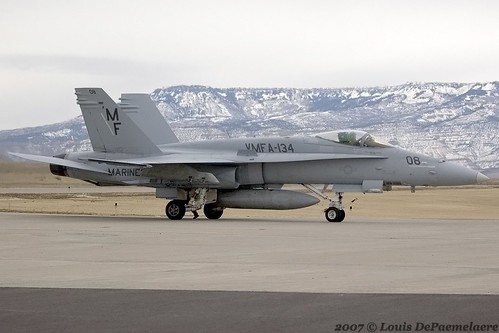
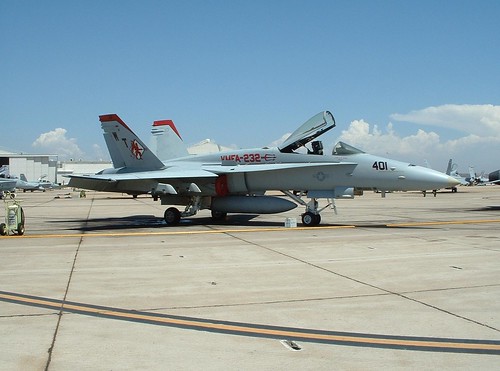
FA-18A aircraft VMFA 115 Silver Eagles
F/A-18D Hornet VMFA(AW)-225 Vikings
VMFA-323 "Death Rattlers" F-18
F/A-18D Strike Hornet VMFA(AW)-224
Stryker Brigade Combat Team vehicle

Stryker infantry carrier vehicles from 3rd platoon, Company C., 5th Battalion, 20th Infantry Regiment, 3rd Brigade., 2nd Infantry Division (Stryker Brigade Combat Team) landed at Osan Air Base, Republic of Korea, July 31 aboard C-17 Globemasters from McChord Air Force Base, Wash. This marks the first overseas movement of a Stryker unit and demonstrates the long-range, rapid-movement capabilities of the SBCT. A total of six Strykers from Fort Lewis, Wash., will participate in a live fire and Stryker capabilities demonstration next week at the Rodriguez Range Complex in North Kyungki Province. This training continues to demonstrate the commitment to the ROK/US alliance and the ability to rapidly reinforce the Peninsula as needed. After a week of training, the Stryker unit will return to Fort Lewis.
Royal Horse Artillery AS90 self propelled gun
Stryker army armoured vehicles
Canadian Army's LAV III (light armoured vehicle)
Leopard 2a4 mbt picture
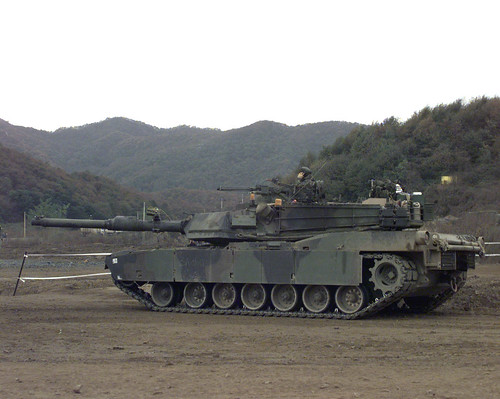
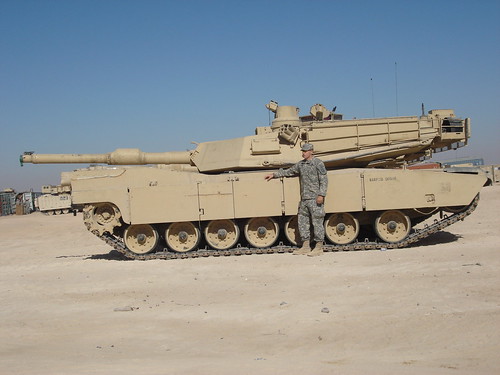
m1 main battle tank in iraq pictures
f35 joint strike fighter cockpit
raf Avro Vulcan delta wing bomber
b52h heavy bomber free wallpapers
belgium f16 fighter aeroplane photos
F135 fighter jet afterburning turbofan engine picture
AV-8B vertical takeoff and landing aeroplane
C-5 Galaxy transport aircraft wallpaper
F14 tomcat free desktop theme
german tracked anti aircraft gun carrier
fighter airplanes pictures of ww11
world war 2 military aircraft wallpapers
italian amx Fighter airplane pictures gallery
italian ef2000 fighter wallpaper
german af Tornado strike fighter airplane
raf tornado strike aircraft
wiesel weapons carrier pictures
newest tank of the russian military
russian surface to air missiles mobile launcher
russian nuclear missiles mobile launcher
new weapons pictures of russian military
russian T-26 tank drawing
cut section picture Centurion tanks
french amx30 mbt pictures
ww1 french tank photos
Leopard 2 tank engine picture
ww1 british tank cutaway
mercedes military truck gallery
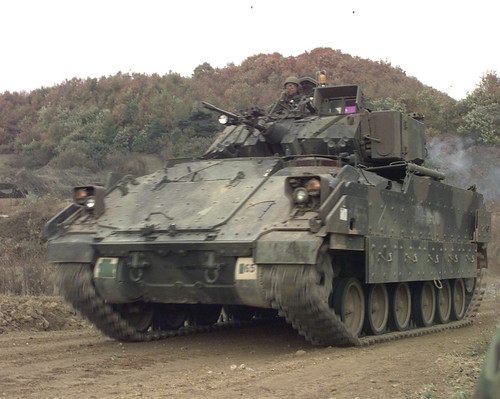
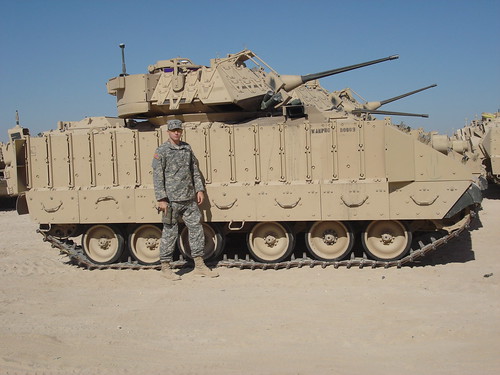
m2a3 Bradley wallpapers
latest fighting vehicle of geman army


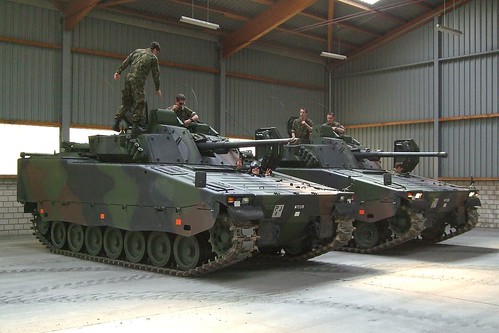
One measure to achieve the one-piece cabin is the use of an unmanned, double-asymmetrical turret ,while slightly off-center turrets are common in IFVs, the Puma's turret is on the left-hand side of the vehicle, while the main cannon is mounted on the right side of the turret and thus on the middle axis of the hull when the turret is in the forward position.
The outer hull (minus the turret) is very smooth and low to minimize bullet traps and general visual signature. The whole combat-ready vehicle in its base configuration will be air transportable in the Airbus A400M tactical airlifter. Its 3+6 persons crew capability is comparable to other vehicles of comparable weight like the US American M2 Bradley IFV, and the same as in the Marder
russian latest military truck
italian C1 Ariete tank photos
Chieftain tank 3d pictues
canadian army leopard1 c2 tank in afghanistan
wwii Valentine light tank photos
leopard 2a6 tank open fire pictures
leopard2 a6m can pictures
leopard 2a6 pictures gallery
leopard-2a6 mbt on tank transporter
Sukhoi Su-35 Super Flanker specs


Su-35 Super Flanker, Sukhoi
Main specifications
Length 21.9 meters
Height 5.9 meters
Wingspan 15.3 meters
Take-off weight, with two R-77 and two R-73 25.3 tons
Take-off weight, with maximum payload 34.5 tons
Total thrust available, two Saturn 177S powerplants 29 tons
Thrust to weight ratio, under normal and maximum load 1.14 / 0.84
Maximum fuel in integrated fueltanks 11.5 tons
Maximum weapons load 8 tons
Service ceiling 18 kilometers
Range with maximum fuel, on sea-level and altitude 1,580 km / 3,600 km
Ferry range, with two PTB-2000 external tanks 4,500 km
Acceleration from 600kph to 1100kph, at 1000m alt and 50% fuel 13.8 seconds
Acceleration from 1100kph to 1300kph, at 1000m alt and 50% fuel 8.0 seconds
Maximum rate of climb, at 1000m alt 280 meters / sec
Maximum airspeed, low-level and altitude (200m / 11000m) 1,400 kph / M2.25
Maximum G-load 9 G’s
Take-off run, full afterburner, normal weight 400-450 meters
Landing roll, brakes + parachute, standard landing weight 650 meters
The aircraft features inertial / sattelite navigation systems, radio navigation system, digital maps, optical fiber and digital communication multiplex comm systems. The comm system has two UHF/VHF radios, Link-16 capacity, and encryption capability. FBW has quadruple redundancy, and the engines support full authority digital engine control, FADEC.
Weapons :
Su-35BM, as an true multirole fighter, will have both air-to-air, air-to-ground, and anti-ship weaponry. Whole current pallete of A2G precision missiles and bombs will be supported on Su-35BM. Regarding air-to-air, the aircraft has an Archer, Alamo, and Adder family capability (R-73, R-27, R-77). Su-35BM will also be able to launch ultra-long range active radar missiles. The type of this weapon shown on the Su-35BM model was Novator KS-172S-1 AAM. The same missile has been presented on the displayed Su-35BM at MAKS 2007 airshow. The KS-172S-1 has an engagement range over 300 kilometers, can be used against any kind of aircraft flying from 3 meters altitude to 30 kilometers altitude, up to 4000 kilometers per hour of speed, and up to 12G. The onl y thing that’s confirmed is that Su-35BM will have ultralong range radar missile engagement capability; KS-172S-1 has not been asured. The other ULR AAM in Russian developement is Vympel K-37/R-37M. It’s an upgrade of MiG-31M’s R-37 missile, which has been sucessfully tested against targets 300 kilometers away.
Other Vympel’s designs are not confirmed either; such as ramjet, thermal, or antiradiation variant of R-77. This capability could be easily added at some future point. Vympel also stated that it has finished working on the upgraded variant of antiradiation R-27P. Since L175M is chosen for the standard electronic warfare module for all new Russian aircraft, R-27P could be connected to work in conjuction with Su-35BM’s EW unit. Both short and long burn variants of the antiradiation R-27, eg. the 27P and the 27EP, are on the payload list.
The misterious unspecified long-range anti-ground, anti-ship and anti-radar missiles are still a matter of debate, but several sources indicate that GRAU-coded 3M14AE and 3M54AE missiles are the unspecified weapons. Both missiles are produced by NPO Novator, and Sukhoi has a long tradition of partnership with this design bureau; this raises the issue of long-range AAM too, since Sukhoi is clearly pushing the Novator’s KS-172S-1 design, while the VVS wants Vympel’s R-37M for MiG-31 deep modernization variant. In any case, Russia won’t use two similiar types of AAM’s in the same time period, so the R-72 could be used for export, while the R-37M would be used on domestic version of Su-35BM.
3M14AE and 3M54AE are the missiles from “Kalibr” system, developed from naval “Club” system. The first is LACM, while the other is standard anti-ship missile. The unspecified anti-radar missile could turn up as new Raduga X-58UShE. It works in wide-band regime, and has a maximum range of 200 km. The sole-carried large ASM/AGM is suspected to be Yakhont-M, GRAU coded 3M55A. Yakhont-M is the upgraded export variant of P-800 Ony x missile. Original Ony x has the range of 300 km.
Su-35BM is also fitted with standard 30mm gun of Flanker family; Gryazev-Shipunov GSh-301